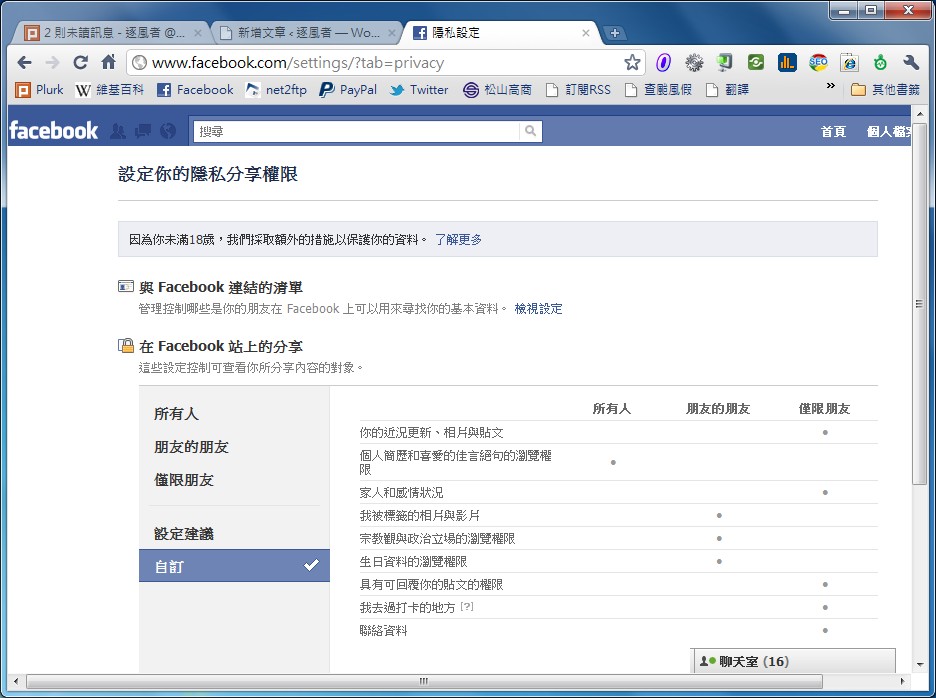
Many people today advocate for privacy, saying you should share as little personal information online as possible, or none at all, because posting it online carries many dangers, the most common being harassment. But I think many people simply don’t pay attention to privacy (at least, that’s what I’ve observed). Plenty of people generously make their phone numbers, addresses, and other details public, and some even dare to upload intimate photos online. Others are more aware and understand the dangers of making personal information public, so they don’t openly post their data online. Instead, they set up some protections, such as passwords and Facebook privacy settings. Honestly, these measures barely work. The most fundamental and safest approach is simply not to put anything online at all.
What Are the Dangers of Posting Data Online?Why is posting data online dangerous? There are many reasons. A fairly common one is that some pretty girls like to post their phone numbers online, and then lots of guys see the number and call to chat or flirt… I imagine the women find that really annoying. That’s actually one of the milder harms, since you can always just not answer numbers you don’t recognize. But there’s another type of person who speaks boldly online and tends to say shocking things, and who ends up being “human-flesh searched” (having their personal information dug up by netizens). If that kind of person’s data gets posted online, you get the very classic scene… Then there are the people who like to post intimate photos online. Of course, they’re all “very clever” and add a password, or set things so only they can see them. But those people may have forgotten a famous saying: “There is no such thing as absolute security.” No matter how hard your password is, someone can crack it. Even if you make the photos viewable only by yourself, can’t a hacker plant a Trojan on your computer? They could just steal your account, and that’s that~ Not to mention the many people who upload intimate photos to albums with no protection at all… Really easy on the eyes…
There was also a news story that left me speechless. A thief saw on Facebook that someone had posted a message saying they were going out, so he went to their house and stole things. When the investigation traced it back, the reason the thief could get into the house turned out to be….. the victim had put their home address on Facebook. I think many people, when signing up for accounts, casually fill in their national ID number, home address, mobile phone, landline, and other details in full, not realizing that this data could be sold to fraud rings, or sometimes it isn’t sold at all, but the site’s database gets attacked and member data leaks out. Here are a few tips:
- Before filling in any information, think about whether the site's service is related to the information you're entering.
- If the site doesn't require a particular field, try not to fill it in.
- Think about whether you trust the site or service before entering personal information.
The news story about the thief and Facebook:

Did you know your phone number might be showing up on Facebook without you realizing it?
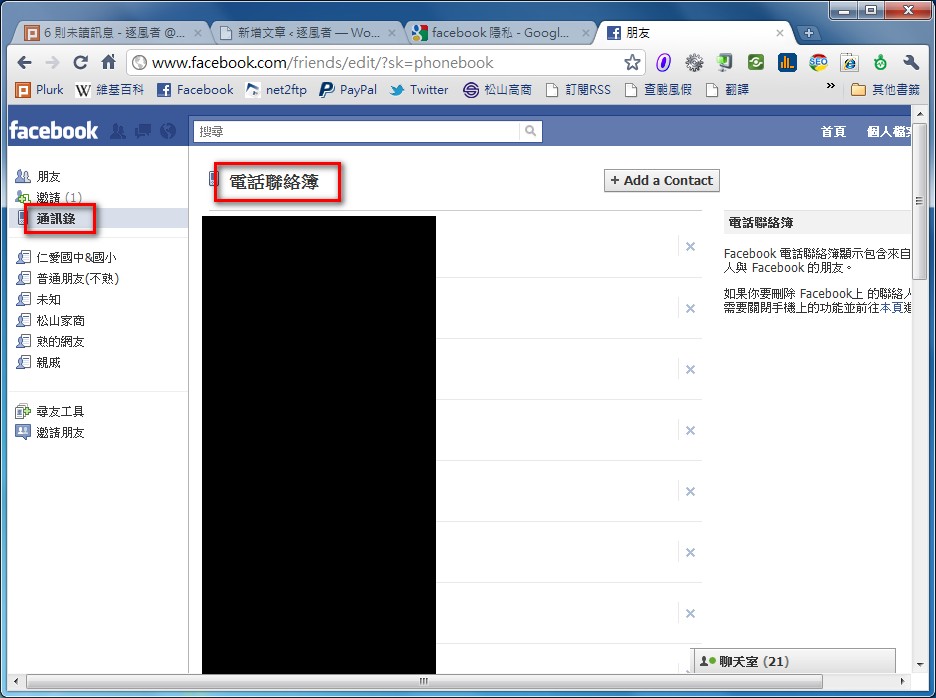
Also, be aware that Facebook often changes your privacy settings automatically. For example, when I went to check just now, I found mine had been changed so that everyone could view it…
What Should You Do?
So how do you avoid these problems? There's a very simple answer: don't put your personal information online. Don't assume you're safe just because you're not famous and nobody knows you. If something you say online stirs up public outrage, you'll suddenly become famous, and all of your personal information will be exposed in an instant. By then, it's too late to regret it. Honestly, I think Taiwan's netizens sometimes go too far. Taiwan is a country with free speech, and everyone has the right to voice their opinions. Even when someone expresses an opinion that is widely known to go against morals, there's no doubt that netizens can condemn it with the power of words. But Taiwan's netizens don't just criticize with words. They also do "background checks," exposing people's personal information, or lash out with filthy language. It's hard to change what people do impulsively when they're angry. That's a social culture, and it has to change slowly. But something we can change more quickly is this: protect your personal information~Closing Thoughts?
The internet has brought people many conveniences, but it has also nearly eliminated personal privacy. Many people simply aren't afraid, or don't care. People I know often say shocking things:- Me: Your Facebook account seems strange. It might have been hacked.
- Friend: It's fine, there's nothing important in my account.
Plenty of people don’t understand privacy at all. They feel that all information can be made public online from the start, and that it’s a way to make more friends. This is more common among younger people. I used to think the same way, but later I found that making data public online causes big problems. Making friends really is fast, perhaps a bit too fast, and it’s a motley crowd, with lots of netizens whose backgrounds are very suspicious… Later, I cut off my public channels thoroughly, including my instant messenger, Facebook, Plurk, and others. I deleted all the netizens I didn’t know or wasn’t close to, and I removed the data I had left online. So now, anyone who wants to get to know me has to first send an email introducing themselves, or I go out and get to know people myself. This way, the chances of being harassed by netizens are much lower.